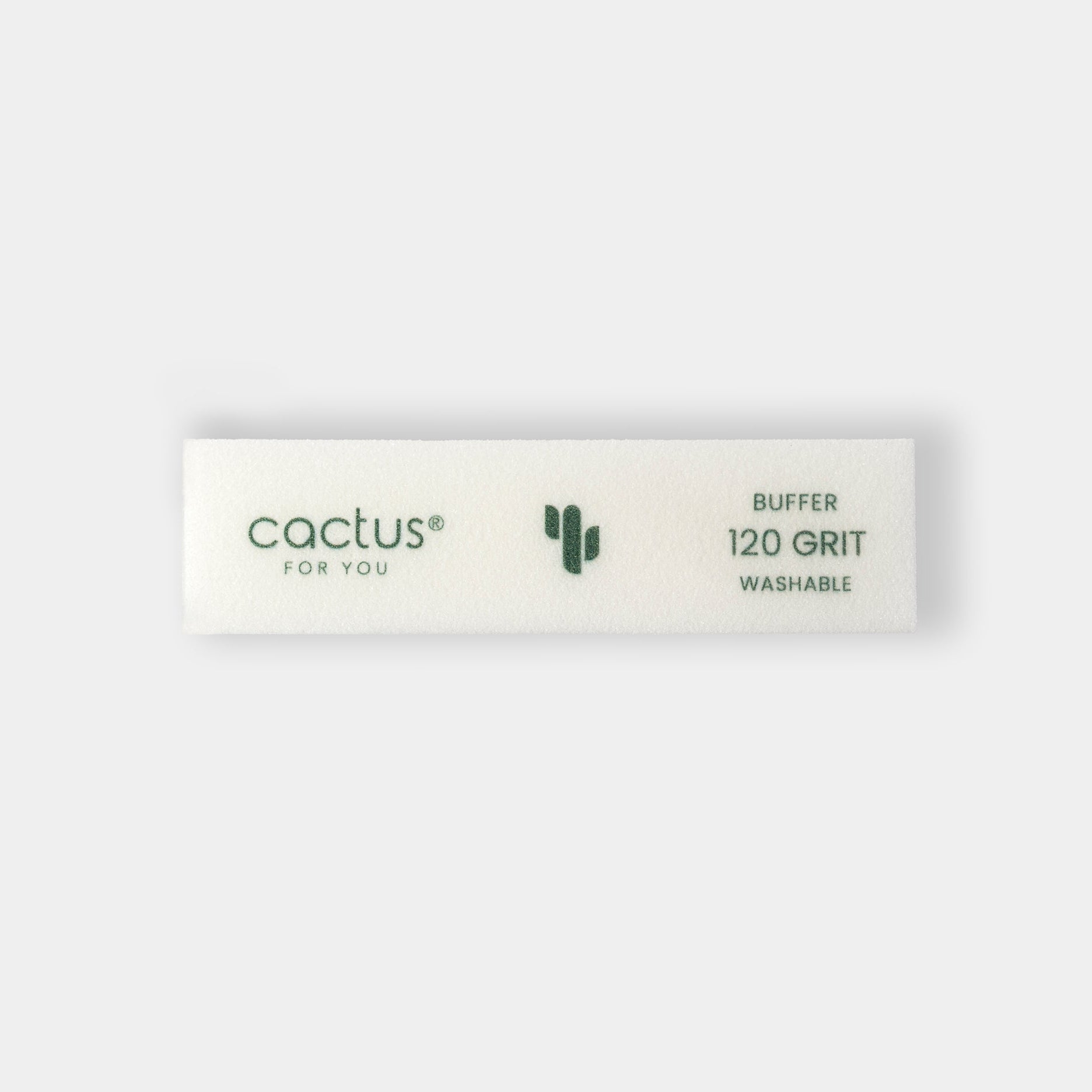
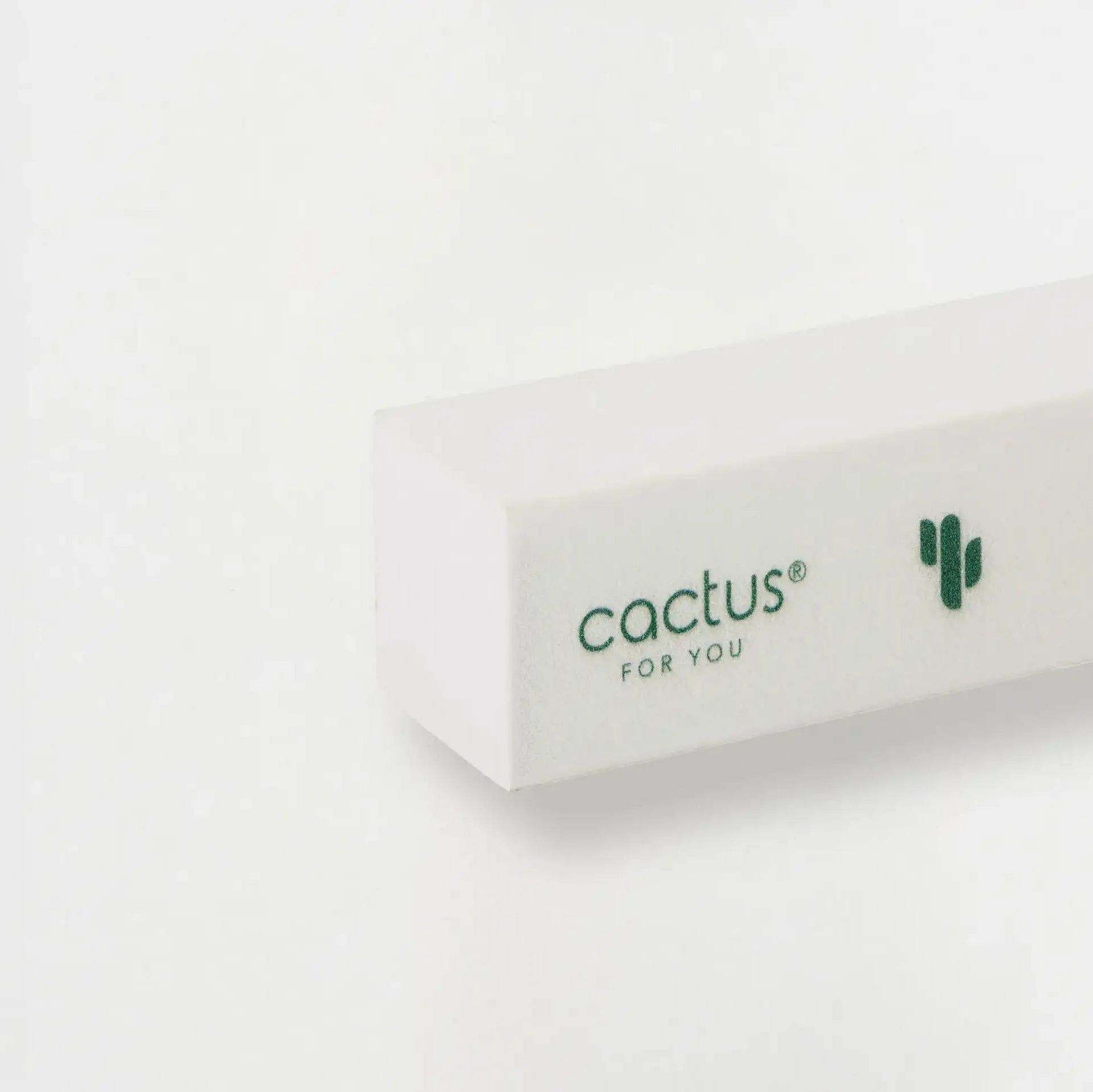
Buffer Disposable 120 - Unit


Disposable buffer Grana 100/180 50pz
Buffer Disposable 120

Enter the Cactus Business Club
Do you have a shop or are you a nail technician with VAT number?
Revolutionize your business with some benefits dedicated to you. Take advantage of them right away, sign up now.
Frequent questions
What are nail buffers ?
What are nail buffers ?
What are the types of buffers available ?
What are the types of buffers available ?
What is the grain of the buffer ?
What is the grain of the buffer ?
Nail Buffers
Nail Buffers
Quick choice: a nail buffer is used to remove shine, smooth and refine the surface before applying gel polish, gel, acrygel or acrylic. It is a simple tool, but when used correctly it improves preparation, adhesion and the durability of the treatment.
What a nail buffer is used for
A buffer is not a traditional nail file. A file shapes the form, length and structure; a buffer works mainly on the surface. In the salon, it is used to remove shiny areas, smooth minor irregularities and prepare the nail plate or structure before the next steps.
When to use it during preparation
Use the buffer after mechanical preparation and before adhesion products whenever you need an even, properly mattified surface. The goal is not to thin the natural nail, but to create a clean base that is ready for the treatment. After mechanical preparation, you can complete the process with the appropriate nail prep products.
Which nail buffer to choose
- Disposable Buffer 120 - Single: suitable for refining, mattifying and preparing the surface. The 120 grit provides useful abrasiveness while maintaining control.
- Disposable Buffer 120 - Pack of 10: ideal for keeping a supply at your workstation and working efficiently between clients.
- Disposable Buffer 100/180 Grit - 50 pcs: a practical choice for frequent salon use, with two grits for preparation, mattifying and more controlled smoothing.
120 grit or 100/180 grit: the practical difference
120 grit is useful when you want to smooth and mattify with good working power. A 100/180 buffer offers two levels of abrasiveness: the coarser side helps when more action is needed on the surface, while the finer side is better suited to finishing and controlled preparation. The choice always depends on the nail plate, any product already present and the stage of the treatment.
Why choose disposable buffers in the salon
Disposable buffers help maintain a more hygienic and organised workflow. Each client can have a clean tool, without dust or residue from previous products. In a professional workstation, this is important both for service quality and for the perception of care and safety.
Nail buffers, base coat and treatment durability
A well-prepared surface helps the products applied afterwards perform better. After buffing, you can continue with a gel polish base suited to the nail plate, apply colour from the gel polish collection and seal with a top coat that matches the required finish.
Mistakes to avoid
- Using too much pressure on the natural nail plate.
- Working repeatedly on the same area and thinning the nail.
- Confusing a buffer with a file: they have different functions.
- Using a grit that is too abrasive when only finishing is needed.
- Reusing disposable buffers on more than one client.
- Leaving dust on the nail plate before applying preparation products.
Quick technical guide
- Mattifying the natural nail plate: use light pressure and controlled movements.
- Surface finishing: choose the side best suited to the stage of the service.
- Gel polish preparation: remove shiny areas without thinning the nail plate.
- Gel/acrygel preparation: smooth the surface before applying adhesion products.
- Salon hygiene: use disposable buffers and replace them between clients.
FAQ
What is a nail buffer used for?
It is used to mattify, smooth and even out the nail surface before gel polish, gel, acrygel or other professional systems.
Does a buffer damage the natural nail?
No, when used correctly. Work with light pressure, avoid going over the same area too much and do not use the buffer to thin the nail plate.
What is the difference between a buffer and a nail file?
A nail file is mainly used to shape the form and length. A buffer works on the surface, helping to mattify and refine it.
Are disposable buffers better?
For salon use, yes. Disposable buffers help maintain better hygiene, organisation and safety between clients.
When should I use a 100/180 buffer?
When you want more versatility: one coarser side for working the surface and one finer side for finishing or more controlled preparation.