

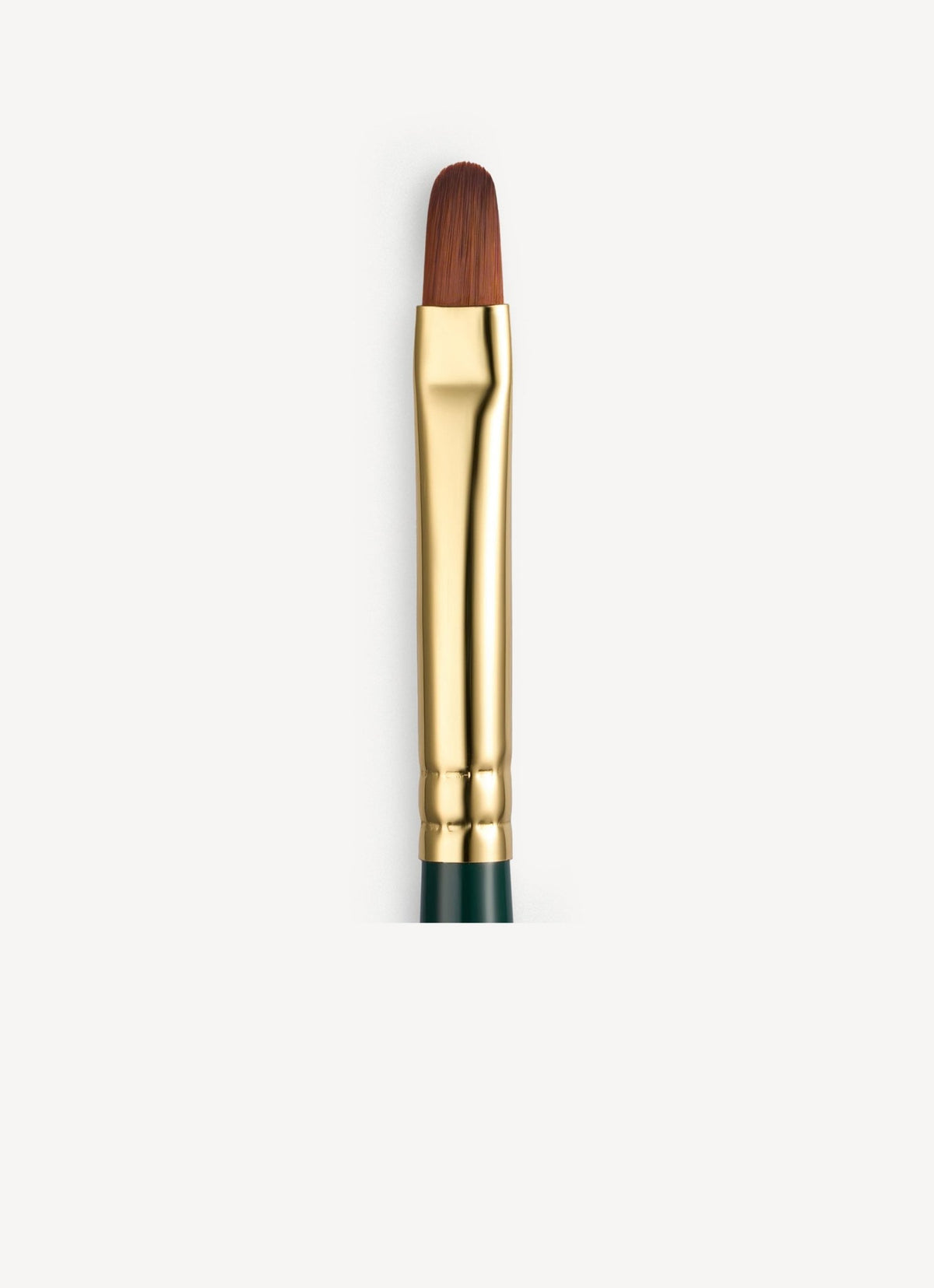


100% Nylon Watercolour Brush No. 0
Nylon, No. 0


100% Nylon Watercolour Brush No. 2
Nylon, No. 2


Nail Brushes
Quick guide: size is not the only consideration when choosing a professional brush. Shape, tip length, bristle flexibility and technique all make a difference. For gel, acrygel, detail painting, ombré or decorations, the right brush makes your work cleaner, more precise and easier to control.
How to choose the right brush
Before choosing a brush, consider the task: applying product, building a structure, shaping acrygel, drawing fine lines, blending colours or applying decorations. Each technique requires different control of the bristles.
Gel brushes
Gel brushes should help you distribute the product evenly, control the cuticle area and work across the surface without build-up. Synthetic bristles offer flexibility, softness and control during application.
- Oval Gel Brush No. 4/8: for controlled work, the cuticle area and precise application.
- Oval Gel Brush No. 6/10: for larger surfaces and faster application.
- Oval Gel Brush No. 6/8: a balance between control and coverage.
- Square Gel Brush No. 6/8: for a more defined application and control of the sidewalls.
Acrygel brush
Acrygel is not applied like a fluid gel: it needs to be moved, pressed and shaped. Choose a brush that allows you to apply pressure precisely without losing control.
- Acrygel Brush: designed for precise shaping and structure building.
Detail painting and fine details
Fine lines, floral details, scrollwork, outlines and intricate designs require a fine, flexible, stable tip. The tip should spring back into shape and follow the movement of your hand.
- Detail Painting Brush No. 0/9: for long details and intricate decorations.
- Detail Painting Brush No. 0/7: versatile for lines and small details.
- Detail Painting Brush No. 0/5: for short, very precise details.
- Nail Art Brush No. 0/10: for fine lines and a controlled long tip.
Blending, baby boomer and ombré
For baby boomer designs and colour transitions, the brush should release the product gradually. The bristles should be soft yet controllable, creating gentle blends without harsh patches.
- Ombré Brush: for blending, baby boomer, ombré, flakes, glitter and soft transitions.
Watercolour and artistic techniques
When working with watercolours, Gel Painting or Art Pasta, you need precision and colour control. A fine tip helps you control the amount of product and define details.
- Kolinsky Brush No. 1.5: soft, flexible bristles for refined details.
- 100% Nylon Watercolour Brush No. 0: for watercolour, Gel Painting, Art Pasta and precise decorations.
Decoration tools
For rhinestones, pearls, crystals and 3D details, dedicated tools make it easier to position each accessory without marking your work.
- Jewels Pen: for picking up and placing rhinestones, crystals, pearls and small accessories.
- Double-ended Dotts Tool 0.7 mm - 1.5 mm: for dots, polka dots and precise details.
Quick technique guide
- Builder gel: oval or square brushes.
- Acrygel: a dedicated brush for pressing and shaping.
- Detail painting: fine 0/5, 0/7, 0/9 or 0/10 tips.
- Baby boomer: an ombré brush.
- Watercolour and Art Pasta: Kolinsky or fine nylon.
- Rhinestones and decorations: Jewels Pen or Dotts.
How to make brushes last longer
Clean the brush according to the product used, do not squash the tip, remove residue from between the bristles and keep it protected from dust and direct light. A misshapen or dirty brush reduces precision, particularly around the cuticle area and when drawing fine lines.
Mistakes to avoid
- Using the same brush for gel, acrygel and detail painting.
- Choosing a tip that is too large for detailed work.
- Using a detail painting brush to move too much product.
- Failing to clean the bristles properly after Gel Painting, Art Pasta or highly pigmented colours.
- Storing the brush without a cap or with bent bristles.
FAQ
Which brush should I use for gel?
Oval and square brushes are useful for gel. An oval brush helps around the cuticle area, while a square brush gives more control over the sidewalls and defined surfaces.
Which brush should I use for Acrygel?
Use a dedicated brush that allows you to work the product with pressure and precision. Acrygel needs to be shaped, not simply spread.
Which brush should I choose for fine lines?
For lines, details and detail painting, choose fine tips such as 0/5, 0/7, 0/9 or 0/10.
Which brush do I need for a baby boomer design?
An ombré brush is suitable for baby boomer designs and blending because it creates softer colour transitions.


Business Club
Have a VAT number?
Join Cactus Business Club!
A permanent 15% discount on all Cactus-branded products.

Jolly Points
1 POINT for every €1 SPENT
Shop, collect* points and turn them into credit
for your next orders.
*To earn Jolly Points, you must be logged in to your account when you make your purchase.