Fiberglass Gel Perfect Milky 50g


Fiberglass Gel Powder 50 g

Fiberglass Gel Perfect Milky 15g

Fiberglass Gel Powder 15g


Fiberglass Gel Nail Repair 50g
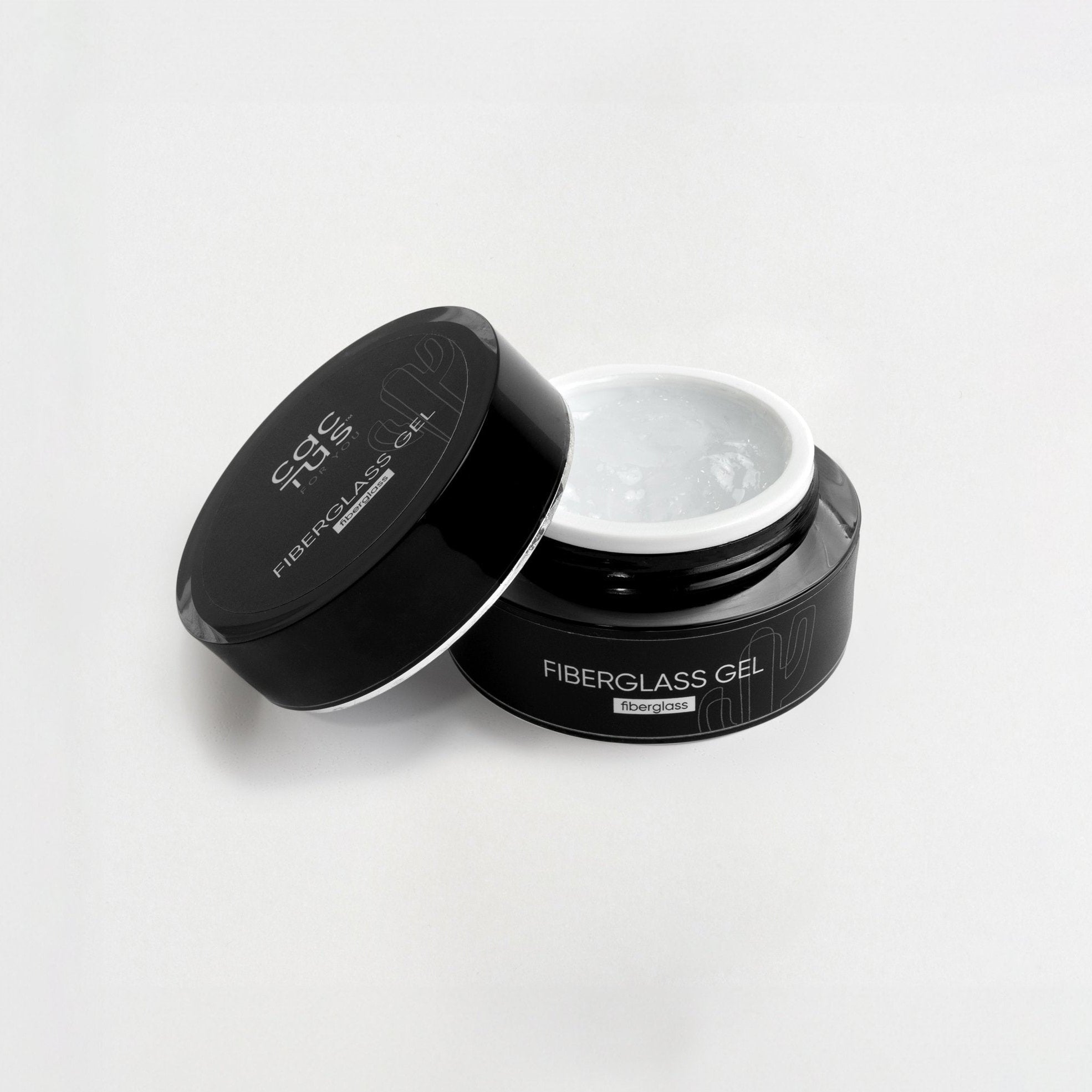
Fiberglass Gel Nail Repair 15g

Join the Cactus Business Club
Do you own a shop or work as a nail technician with a VAT number?
Transform your business with benefits designed for you. Sign up now to start enjoying them.
Frequently Asked Questions
How to remove the Fiberglass Gel Nail Repair?
How to remove the Fiberglass Gel Nail Repair?
The Fiberglass Gel Is it suitable for creating a curved nail?
The Fiberglass Gel Is it suitable for creating a curved nail?
How long does it last? Fiberglass Gel once applied?
How long does it last? Fiberglass Gel once applied?
Fiberglass Gel
Fiberglass Gel
Fiberglass Gel Nail Repair – Glass-Fibre Gel for Reinforcement and Extensions
Fiberglass Gel Nail Repair combines a transparent gel with visible glass fibres to create a resistant structure for professional nail repairs and extensions. Its dense consistency is designed for controlled application and targeted reinforcement.
Composition and Consistency
Fiberglass Gel has a dense consistency that supports precise, controlled work. The glass fibres are visible in the product. Its density helps prevent running and makes it easier to create a stable, even structure. The source information recommends it for targeted repairs or as a first structural layer for extensions created with a Nail Form.
Despite its density, the gel is designed to remain workable and stable. The source information states that it is not intended for building the final apex because visible fibres may affect the finish. A base or cover gel from the CACTUS line can be applied afterwards to complete the structure.
Colour and Transparency
Fiberglass Gel is transparent and is described as non-yellowing. Its clear finish makes it suitable as a structural layer under coloured products or for natural-looking services.
Sizes
The product is available in 15 g and 50 g formats. The 50 g size is intended for professionals who use the product regularly in salon services.
Curing Time
According to the source instructions, curing takes 60–90 seconds under a 48W LED lamp or approximately 3 minutes under a traditional UV lamp. Always check the individual product instructions and lamp compatibility before use.
Removal and Durability
Fiberglass Gel can be removed with a nail drill using a red- or blue-grit bit, or with a traditional file, according to the source instructions. Removal should be controlled to avoid damaging the natural nail plate.
The source information describes the gel as highly resistant and suitable for weak, damaged or bitten nails. It can be used for nail extensions, lengthening or small repairs where additional structural support is required.
Application Method
The source application method includes the following steps:
Remove the previous product: completely remove old product and make sure the nail surface is clean and free from residue.
Prepare the nail: carefully mattify the entire nail plate with a 180-grit file or buffer, avoiding shiny areas that could affect adhesion.
Clean and dehydrate the nail with NAIL PREP, then allow 30 seconds for the product to evaporate completely.
Apply Bonder: apply a thin layer of BONDER SCOTCH and allow it to air-dry completely for one minute.
Apply the base: apply a thin layer of STEP ONE base across the nail plate as specified in the source protocol.
Apply Fiberglass Gel: using a suitable CACTUS brush, apply a thin layer and build the required structure or repair.
File and finish: after curing, file the surface to the desired shape, remove dust and cleanse as required.
Complete the structure: finish with a base or cover gel to create the apex, then apply CACTUS GEL POLISH and TOP NO WIPE when required by the service.
Useful Tips
When covering natural nails with Fiberglass Gel, the source instructions recommend avoiding an excessively thin free edge. They suggest refining the front edge so that the tip remains approximately 1 mm thick, helping maintain structural resistance.